


Flying home from this year’s Indy 500, I couldn’t help but do the math and realize that the flight took me just as long as it would if I’d decided to drive instead. And this is the sort of problem that wouldn’t be an issue if America hadn’t largely abandoned passenger rail. Because trains are good for lots of things besides avoiding Manhattan’s congestion relief charge. So, at least on paper, Brightline should be awesome, because trains are awesome, and I wouldn’t have to fly or drive — I could sit in peace as the countryside passed me by. And maybe Brightline would be awesome if it hadn’t also earned a reputation for operating America’s deadliest trains.
With a body count that high, it’s hard to get too mad when Bloomberg reports bankruptcy could be on the horizon for the U.S.’s deadliest railway. Don’t take that to mean Brightline will definitely file for bankruptcy, though. The rail company is still for sale, and it’s possible a well-funded buyer could swoop in and save the struggling company. Unfortunately for Brightline, it’s been trying to sell itself for a while now, and no one’s shown up to make an offer it would accept. With its self-imposed deadline to find a buyer now gone, Bloomberg reports Brightline has reached a point where restructuring feels inevitable:
The company is considering proposals from competing groups of municipal and corporate bondholders, who are offering loans that would keep Brightline operating as it restructures in court, said the people, who asked not to be named because the information isn’t public. Such financing could put the lenders in place to own Brightline as a function of the restructuring.
The loan proposals come ahead of major debt payments due on June 15 and July 1 and as Brightline has struggled to find a buyer. Bankers extended a May 22 deadline for potential bidders in hopes of soliciting more interest, some of the people said.
The good news is that since Brightline’s reportedly talking about restructuring debt, not taking its trains home and closing up shop, the trains should keep running, and riders shouldn’t have to worry too much about service interruptions.
Debt > deaths
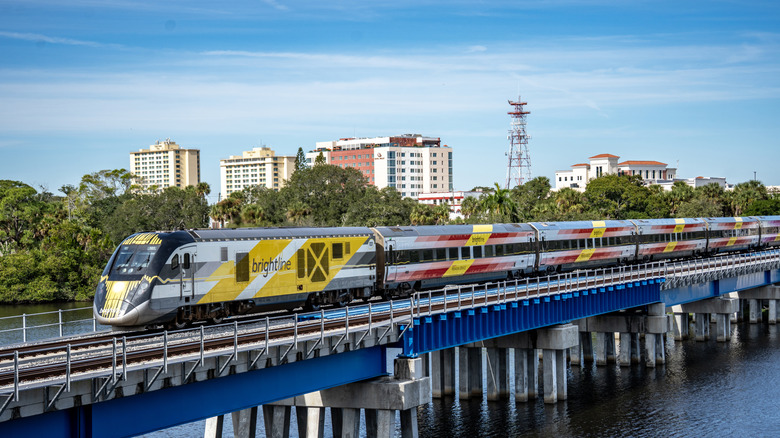
Considering the Atlantic published an article last fall titled “A ‘Death Train’ Is Haunting South Florida,” it would be understandable to assume the pile of dead bodies has finally caught up with Brightline. Instead, the problem appears to be that the company has too much debt. From Bloomberg:
Under the guidance of restructuring advisers from Alvarez & Marsal, Brightline has been holding confidential discussions since at least April with certain holders of its $5.5 billion debt about how it could restructure its liabilities, either in or out of bankruptcy protection.
Other than a couple billion dollars in debt and its use of at-grade crossings that we’ve known for decades are so dangerous, Amtrak got rid of them on its busiest East Coast routes back in the 1980s, it sounds like things are actually going pretty well for Brightline.
Brightline’s revenue has improved recently, increasing 32% in April from a year earlier. But that hasn’t been enough to change the company’s financial trajectory, with ridership and revenue falling far short of projections. The railroad carried about 3.1 million riders in 2025, about the same as Amtrak’s Acela, but less than half of what it projected in a bond offering document just the year before.
Not bad at all. Just gotta trade a percentage of the company for a little loan forgiveness, and Brightline will be right as rain. At least as long as workers don’t continue to quit over all the at-grade crossings being so deadly, as one former employee told the Atlantic:
There are 331 grade crossings along the Brightline route in South Florida. James Perkins, a former Brightline conductor, cited this when explaining to me why he no longer works for the company. He mostly enjoyed his time at Brightline, he said—the company was a good employer—but he didn’t want to work on that route anymore in large part because of how often the train would hit people.

