


Key Points
- Aurora Flight Sciences announced the triangular wings for the X-65 demonstrator have arrived at its Virginia facility and integration is underway for the DARPA CRANE program.
- The X-65 has a 9.1-meter wingspan and 3,175-kilogram gross weight, targeting first flight in 2027 with ground testing planned for late 2026 at Manassas Regional Airport.
The experimental aircraft that could change how every future military jet is built just cleared another milestone, after Aurora Flight Sciences announced that the triangular wings for its X-65 demonstrator have arrived at its Virginia integration facility and are now being mated to the fuselage, bringing the program a significant step closer to a first flight target in 2027 that the defense research community has been watching with growing interest.
The wing delivery is the latest visible marker of progress for a program that The Defence Blog first covered in April 2026, when Aurora confirmed that the X-65 fuselage had arrived in Virginia and integration of the aircraft’s electrical, propulsion, and active flow control systems was underway. What made the April milestone notable was the transition it represented: from manufacturing to integration, from parts to aircraft. The June wing delivery continues that trajectory, adding the airframe’s most aerodynamically critical structures to a fuselage that is already receiving its internal systems. Ground testing is scheduled for late 2026 at Aurora’s facility at Manassas Regional Airport in Virginia, according to CRANE Program Manager Chris Kent, cited by National Defense Magazine, with flight testing to follow in 2027.
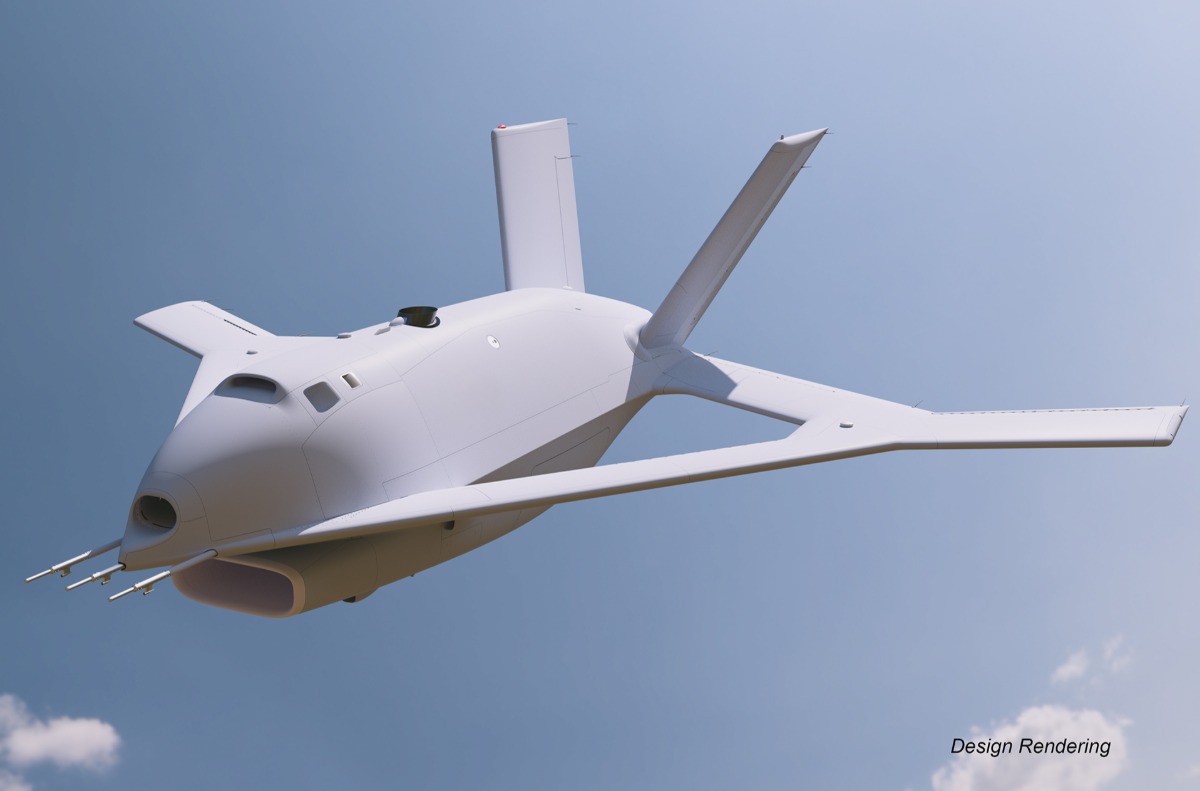
The wings themselves carry a design that is immediately distinctive from anything flying today. The X-65 uses a triangular, or delta-derived, planform with modular outboard wing sections that can be reconfigured between test campaigns, allowing engineers to evaluate active flow control performance across multiple sweep angles rather than committing to a single fixed geometry. That modularity is deliberate and goes to the heart of what the program is designed to produce: not just data from one flight configuration, but a flexible platform capable of generating comparative data across multiple aerodynamic setups. The wings are built with embedded effector pathways throughout their surfaces, housing the plumbing and structural provisions needed to deliver pressurized air to the fourteen active flow control effectors that represent the X-65’s core research purpose.
– ADVERTISEMENT – CONTINUE READING BELOW –
Those fourteen effectors are what makes the X-65 genuinely unlike any aircraft that has flown before at this scale. Active flow control, or AFC, is a concept that aeronautical engineers have studied since the mid-20th century: instead of using physical control surfaces such as ailerons, elevators, and rudders to change an aircraft’s attitude, AFC systems blow precisely directed jets of air over the wing and tail surfaces to reshape the airflow around the aircraft in real time, producing the same pitch, roll, and yaw responses without moving any mechanical components. The concept is elegant and potentially transformative, because control surfaces are among the most mechanically complex, maintenance-intensive, and aerodynamically disruptive features on any aircraft. Removing them eliminates the joints, actuators, and hinge lines that add weight and create drag, and it allows aircraft designers to pursue shapes that simply are not practical when mechanical control surfaces must be accommodated.
The X-65’s wingspan is 9.1 meters (30 feet) and its gross weight is approximately 3,175 kilograms (7,000 pounds), dimensions that place it closer to a light military jet than to the small-scale research drones that previous AFC experiments have used. That scale is the point. CRANE Program Manager Kent told National Defense Magazine that earlier AFC research was largely confined to wind tunnel experiments and small demonstrators too light and slow to generate data applicable to real aircraft. The X-65 is designed to operate at speeds up to Mach 0.7, approximately 857 kilometers per hour (532 mph), and to fly under a Federal Aviation Administration experimental category certification that gives the program flexibility on where and how test flights are conducted. At that speed and weight, the aerodynamic forces the aircraft experiences are similar to those that a military trainer or unmanned combat air vehicle would encounter, making the data the X-65 generates directly applicable to operational design decisions.
Aurora Flight Sciences, a Boeing subsidiary based in Manassas, Virginia, has been the sole contractor for the CRANE program since DARPA selected it in January 2024, after a development process that began in 2020 and included a phase of competing designs. DARPA spent approximately $38 million on CRANE in fiscal year 2024 and $23.8 million in fiscal year 2025, according to Department of War budget documents cited by National Defense Magazine. In August 2025, Aurora and DARPA finalized a co-investment agreement under which Aurora shares in the funding of the program’s completion and first flight, an arrangement that gives the company a financial stake in seeing the aircraft actually fly rather than simply billing for work completed. That structure reflects DARPA’s interest in having Aurora treat the X-65 as a long-term platform rather than a single program, and Aurora has stated explicitly that it intends the aircraft to continue generating research data beyond the initial CRANE program.
The stealth dimension of active flow control is one of the reasons the Air Force Research Laboratory, NASA, Naval Air Systems Command, and the Office of Naval Research are all actively monitoring the CRANE program, as Kent confirmed to National Defense Magazine. The outer mold line of an aircraft, meaning the precise shape of its external surfaces, directly determines its radar cross-section, and current stealth designs must accommodate the joints and hinge lines of conventional control surfaces in ways that create radar-reflecting discontinuities. An aircraft that can achieve full maneuverability with smooth, unbroken surfaces throughout its flight envelope could achieve a lower radar signature than any conventionally controlled aircraft of similar size. That potential application to future stealth combat aircraft gives CRANE a strategic relevance that extends well beyond its immediate research objectives.

