


Sleek family transportation–at a price.
Text by Tim Healey
2026 Hyundai Ioniq 9
Review
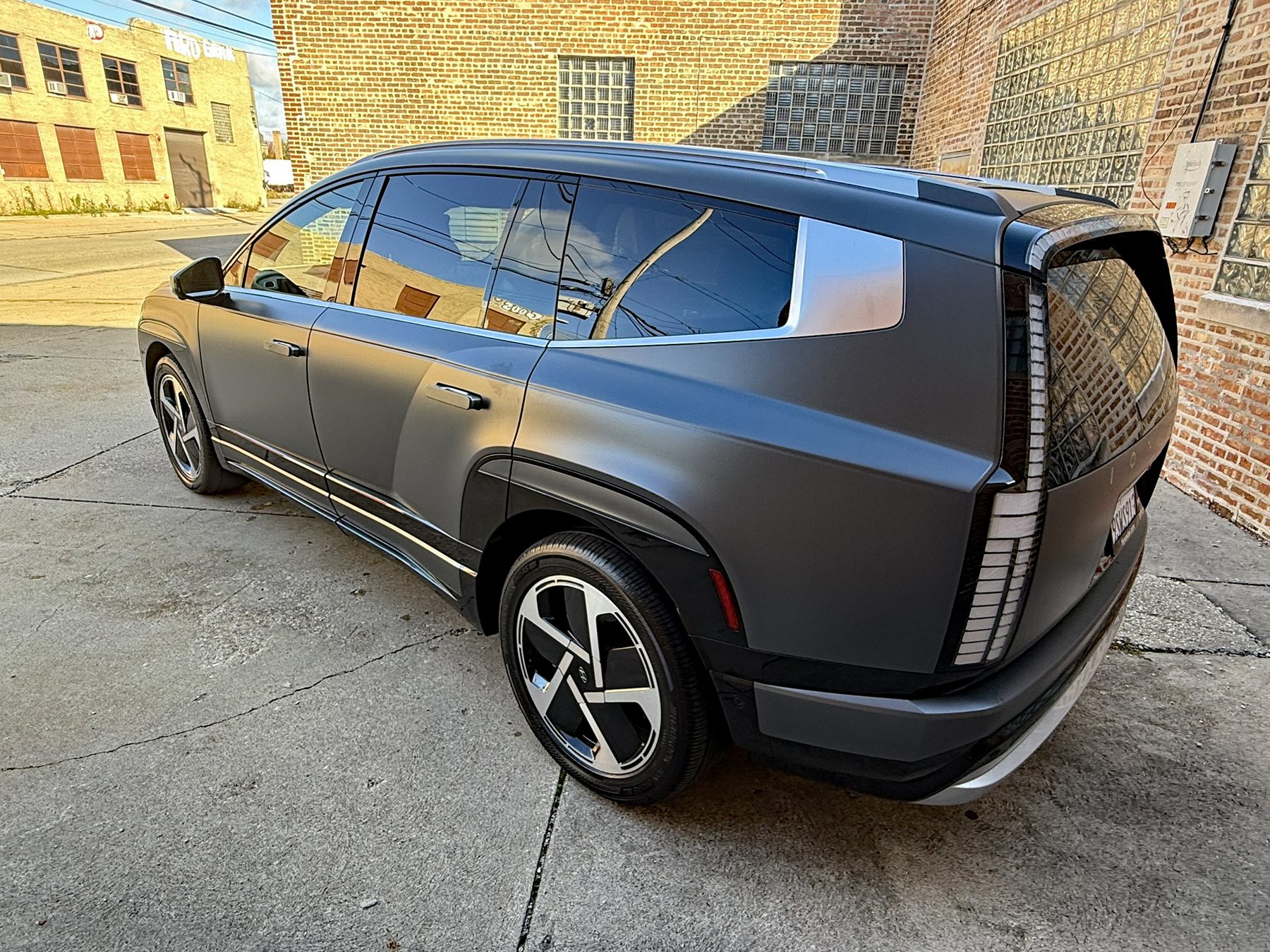
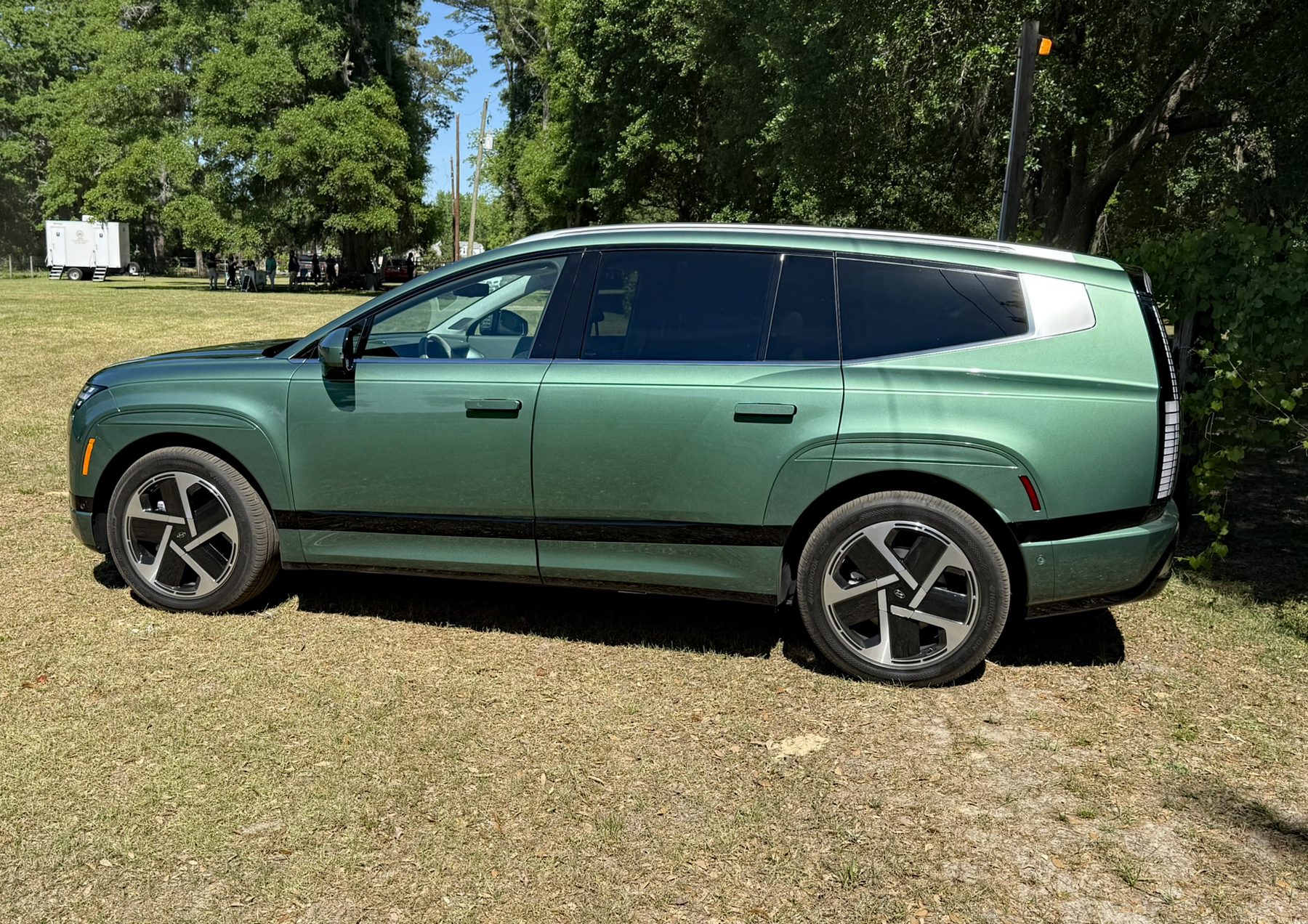
The 2026 Hyundai Ioniq 9 isn’t quite a minivan, nor quite an SUV, but it is all-electric. Think of it as more a multi-purpose people mover, motivated by electricity instead of fuel based on the remains of dinosaurs.
Trim Levels
I had two chances to spend time with the Ioniq 9 – once last year for a week, and more recently, down in Georgia while attending a Hyundai event.
I drove two all-wheel drive versions – a Performance Calligraphy and a Performance Limited.
Engines
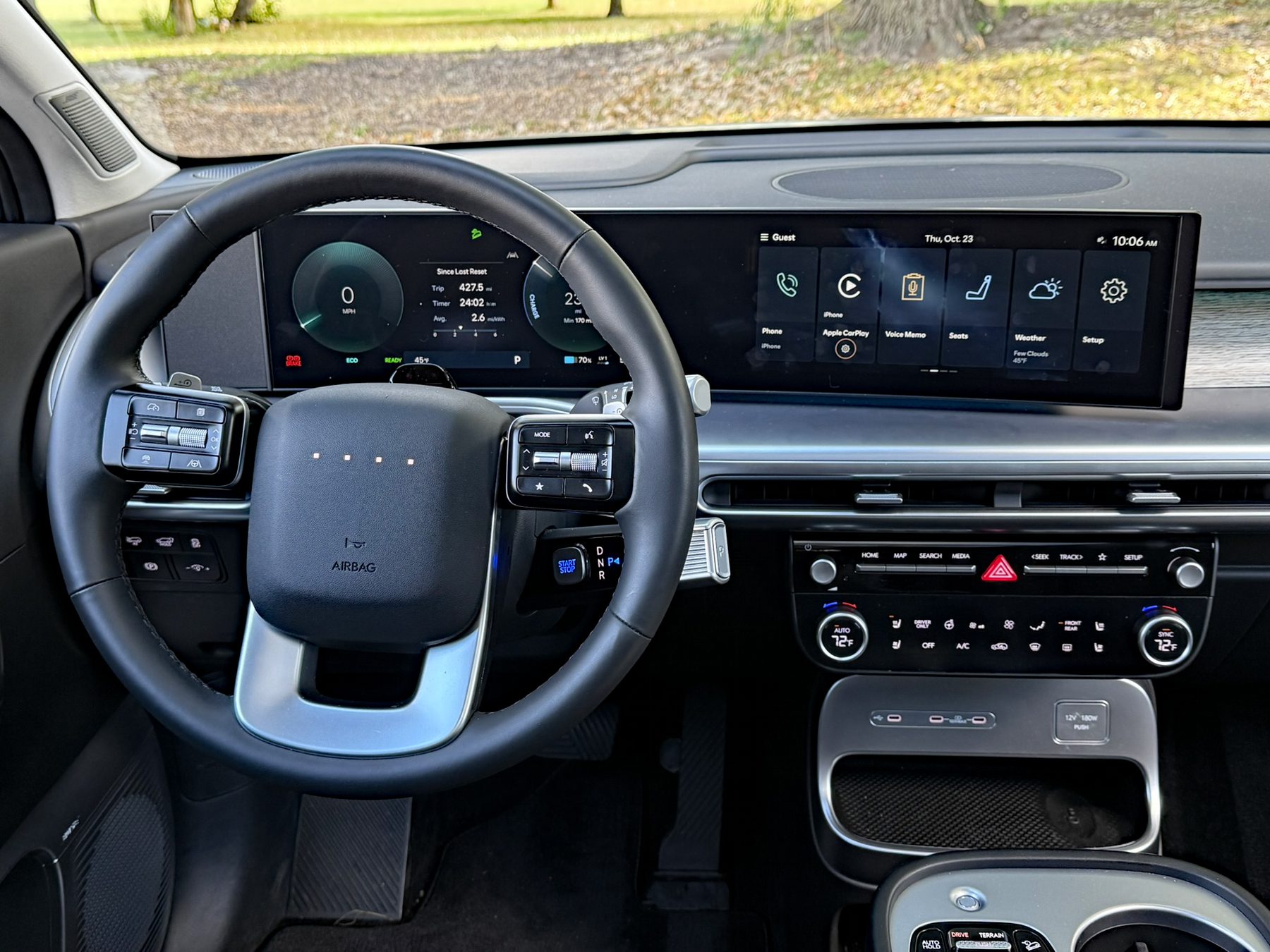
Performance trims have 157-kW electric motors at the front and rear, and the EPA lists the range on Performance models at 311 miles. The total system horsepower is 422, with a total system torque rating of 516 pound-feet.
Power and Performance
That all adds up to smooth and swift acceleration on the road. A three-row people mover is no sports car, but there’s enough zoot here for easy freeway passing.
Ride and Handling
Even the handling is better than expected. Not sports-car precise, but the usual flaws present in taller, longer people movers are mitigated. There’s little body roll and cornering is sharper than expected. That said, the steering is a tad distant and quite artificial in feel.
The ride is glider-smooth, for the most part.
Cabin and Controls
Inside, Hyundai’s design team cooked up an open-feeling cockpit that looks and feels good. The user interface is generally easy–there are buttons and knobs where you’d expect there to be buttons and knobs. A large digital screen sweeps across the top–it’s easy to read, though some menus are a tad too busy.
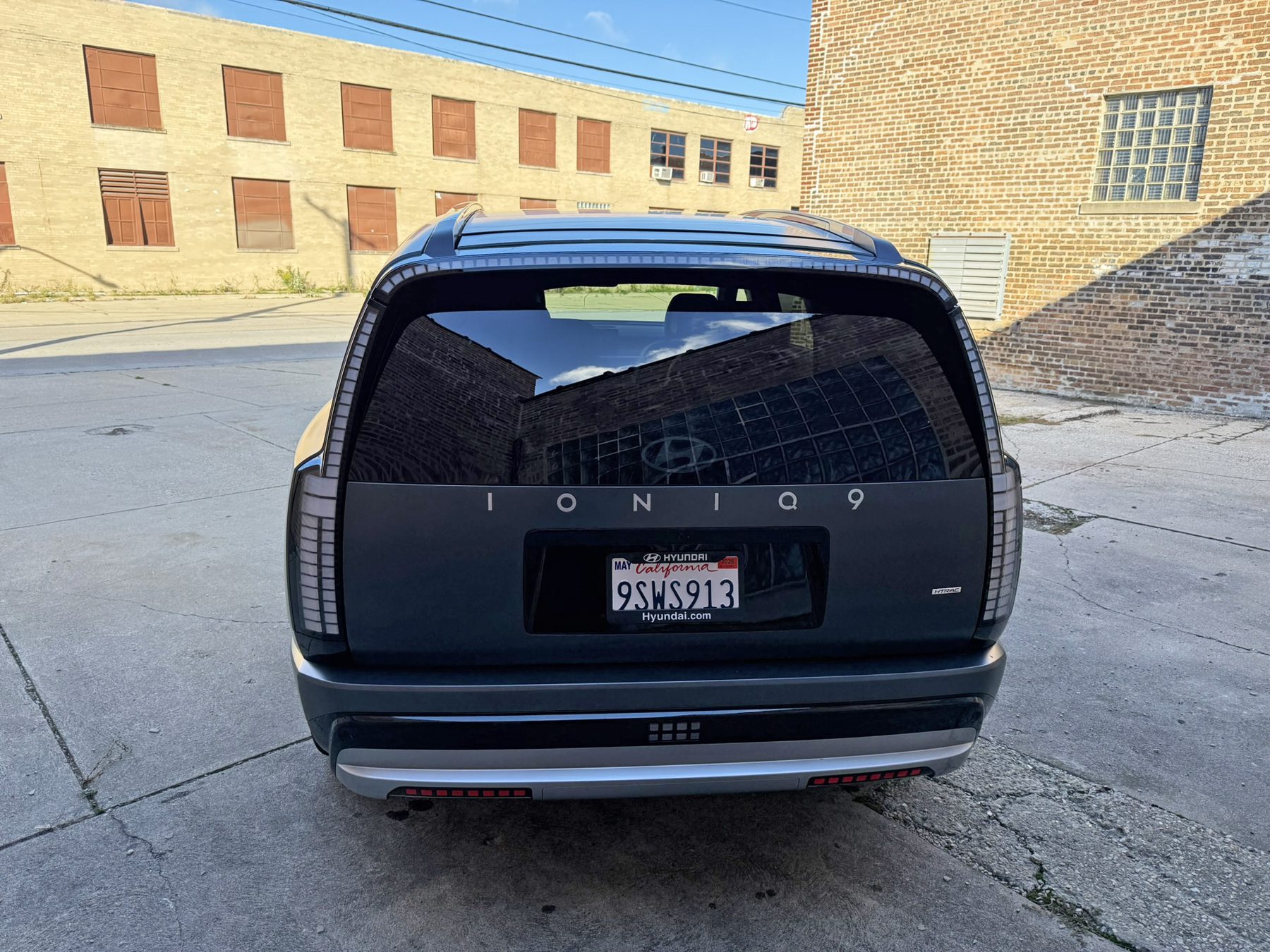
Cubby holes and storage abounds–this thing is well setup for kid-hauling and/or road-tripping. The only demerits are the slightly odd-looking steering wheel, and, on a practical level, the wonky shifter takes some getting used to. It’s a little too easy to find reverse instead of drive and vice-versa.
The front seats were plenty comfortable on a long drive across the Savannah area. Outside noise of all types stays outside.
Prices and Equipment
Opting for a Performance trim will cost you. The Limited based at around $71,000 and the Calligraphy came close to $75,000. To be fair, these were loaded vehicles, with features such as 21-inch wheels, panoramic sunroof, heated and cooled front seats, LED lighting all around, heated and cooled second-row seats, second-row captain’s chairs, a power-folding third row, smart cruise control, power liftgate, ambient interior lighting, a sliding center console, front and rear USB ports, navigation, satellite radio, Bose audio, wireless Apple CarPlay and Android Auto, wireless cell-phone charging, head-up display, three-zone climate control, 360-camera, and a digital rearview mirror.
Safety
The list of available advanced driver-aid systems is long and includes lane-keeping assist, forward collision-avoidance assist, blind-spot collision-avoidance assist, blind-spot monitoring, rear cross-traffic collision-avoidance assist, safe-exit assist, all sorts of parking aids, and more.
The 110-kWh lithium-ion battery charges 10 to 80 percent in 24 minutes with a 350-kW DC fast charger and in 109 minutes with a 50-kW fast charger. It will take you 40 minutes on a NACS supercharger. Level 2 AC charging is just under 10 hours.
Value
The 2026 Hyundai Ioniq 9 is a well-packaged electric people mover that works well in terms of interior utility and on-road dynamic. Unfortunately, you get what you pay for, and getting a vehicle that works this well will cost you.
Tim Healey is an experienced automotive journalist and editor. He’s had bylines at Consumer Guide, Web2Carz.com, AutoGuide.com, and elsewhere. Most recently, he was the managing editor at The Truth About Cars. He also dabbles in sports with bylines at Fighting Irish Wire and Da Windy City. He lives in Chicago.
Listen to the Car Stuff Podcast

