

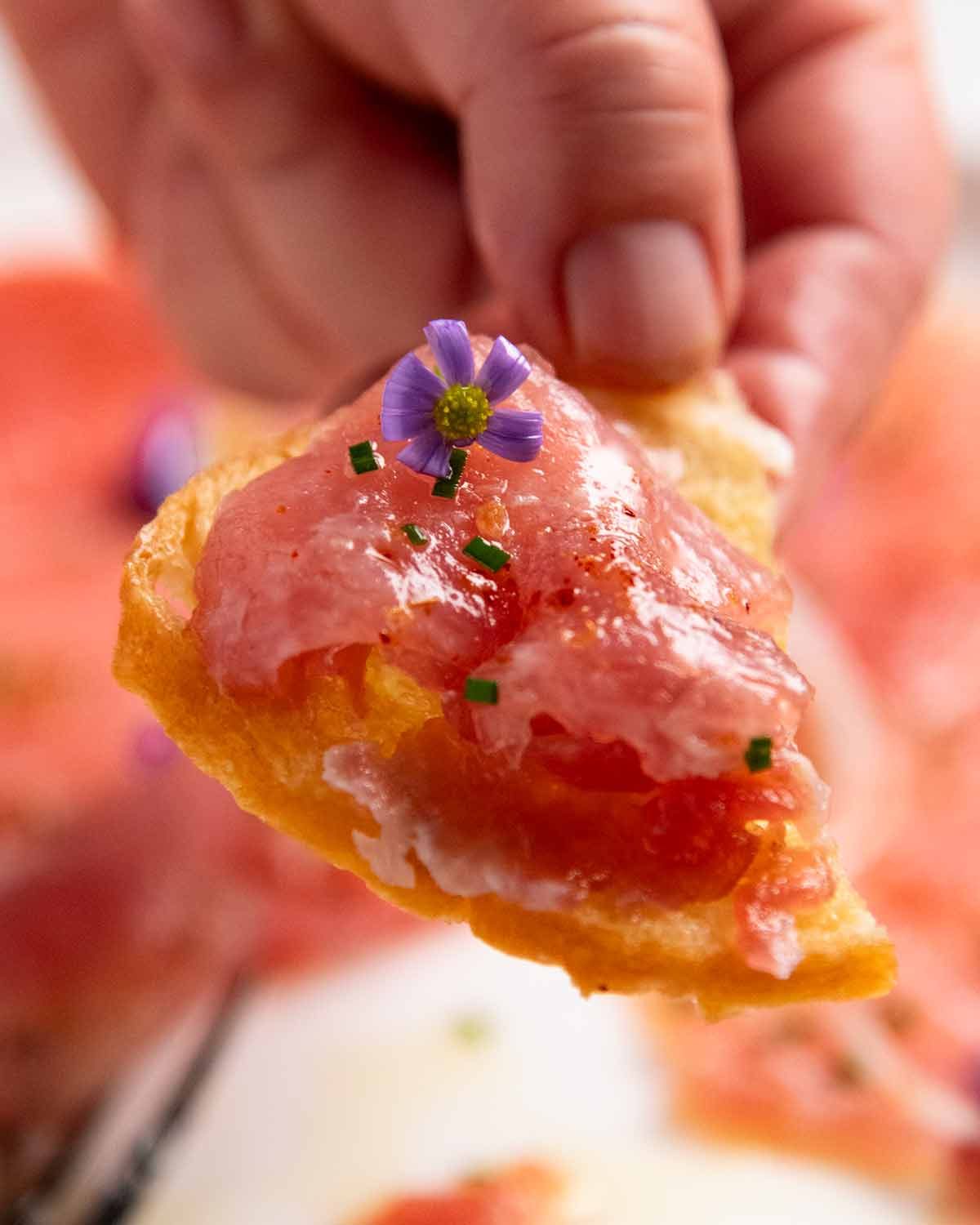
Tuna Carpaccio is an Italian dish made with paper thin slices of tuna and seasoned with lemon and olive oil. It’s an elegant starter or light main I used to make in my restaurant days and just as easy to make at home. Let’s go!
Nagi’s Notes


Carpaccio is such a great way to make something cheffy at home to impress, but it’s actually dead easy! I especially love that you can prepare the fish in advance and just pull it out of the fridge and season it on demand. I make this a lot during summer!
Appreciation note: JB’s method of brushing the lemon and olive oil on rather than drizzling like I used to. It means every single bite is perfectly seasoned instead of some parts being overdressed and others missing out.

Tuna Carpaccio
Today’s recipe is a dish from my restaurant days. Every chef knows the starters on a menu matter a lot, they set the tone and expectations for everything that follows, and this is one I used to make over and over when I worked in kitchens.
It’s a fish version of carpaccio, traditionally Italian and originally made with raw beef. First created in Venice, it was served as very thinly sliced and pounded beef with olive oil and lemon. Seafood versions, like tuna carpaccio, came later and are now common across Italian and modern European restaurants.
The fish is so fine, thanks to a light pounding, it almost “smears” as you pick it up and melts in your mouth when you eat it. Serve with lightly toasted thin slices of bread for that perfect contrast that makes it feel like you’re dining out somewhere special (you are, just at home!).
Ingredients
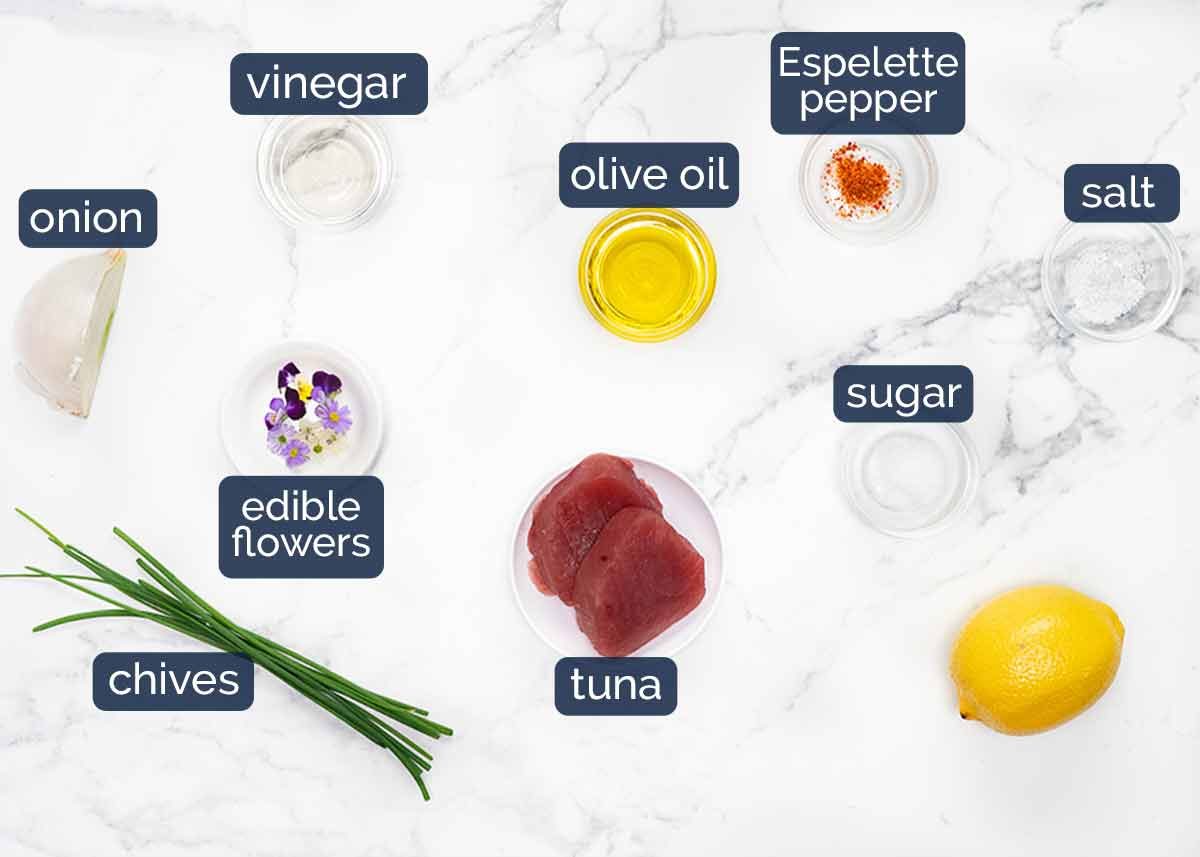
This is all you need to make Tuna Carpaccio. If you can’t find a block of sashimi grade tuna, just get tuna slices from your cheerful local sushi shop instead!
-
Sashimi-grade tuna – You only need 120g / 4oz of tuna to cover a dinner plate. A little bit goes far because it is pounded so thinly. Make sure you get fresh tuna that is safe for eating raw, it doesn’t necessarily have to be sashimi-grade but if it’s sold with that label then you know it is.
Other suitable fish – While I’ve used tuna, you can make carpaccio with any fish that is lovely eaten raw. Some popular varieties used for carpaccio include kingfish, salmon and snapper. See blue box below for more options by region.
-
Lemon vinaigrette (lemon, olive oil, sugar) – It plays a key role in this dish. It brings everything together with its acidity that cuts through the richness of the tuna and lifts the overall flavour, keeping everything clean and balanced. Without it, the carpaccio would definitely feel a little flat.
-
Salt flakes – These are lighter and more delicate than grains so you get better coverage when using it as a finishing salt (as opposed to mixing into things). But don’t worry if you don’t have flakes, you can really use any salt!
-
Onion and vinegar – To make the lightly pickled onion which adds a touch of freshness to the carpaccio. Beef carpaccio is usually made with capers but I find that a little harsh with fish, I prefer a more delicate pickled onion, plus I like how the white onion looks against the red tuna.
-
Chives – Having something green and fresh works well here for both visual and flavour.
-
Decorative garnishes (cheffy!) – You really only need the vinaigrette, something fresh (the onion) and something green (chives), and you’ve got yourself a really tasty carpaccio. But us chefs like to take things one step further (we can’t help it!). So here I’ve used Espelette pepper. It’s one of my favourite French spices. It brings a gentle heat with a slightly fruity flavour that works beautifully here. We’re only touching on it briefly in this recipe, but it really deserves more attention. Trust me, I’ll take the time to talk about it properly in a future post. And I’ve also used small edible flowers which are more about visual than essential for flavour.
While they’re a nice touch I’d insist on using at restaurants, for home purposes I wouldn’t go out of my way to get either of them. Just use chilli powder for a sprinkle of red. As for the edible flowers – these are from Nagi’s garden (pansies).
Other suitable fish for carpaccio
Fish carpaccio can really be made with any fish that is suitable for eating raw (think – your favourite sashimi!). Here are some common varieties I’ve seen used for carpaccio:
How To Make Tuna Carpaccio
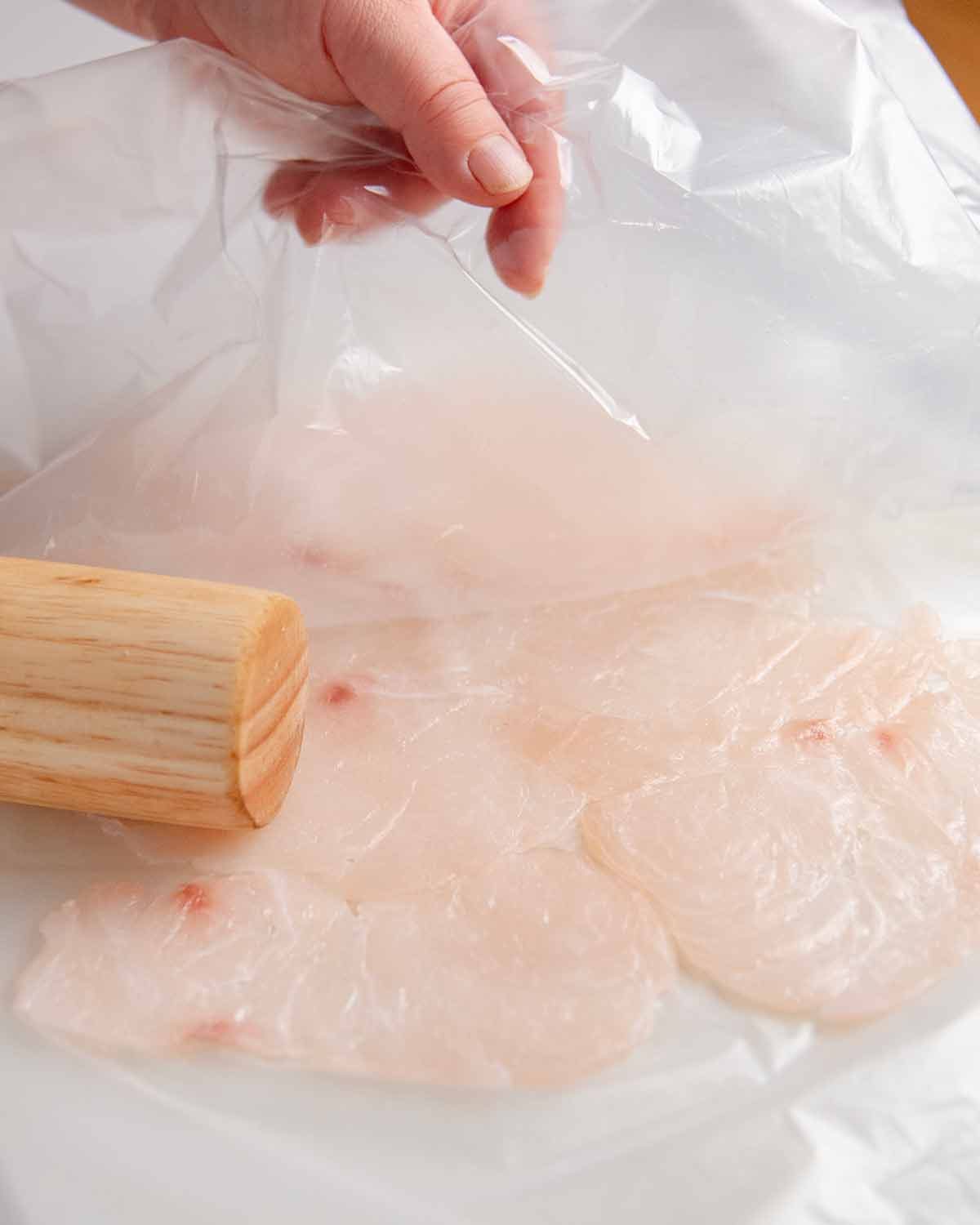
Tuna Carpaccio is simple to make because you only need to pound the fish very lightly. Pounding delicate fish might feel wrong, but not only does it give you that signature silky, almost melt-in-your-mouth texture with a delicate, even thickness, it’s also far easier than trying to slice paper-thin pieces, something even professionals can struggle to do consistently.
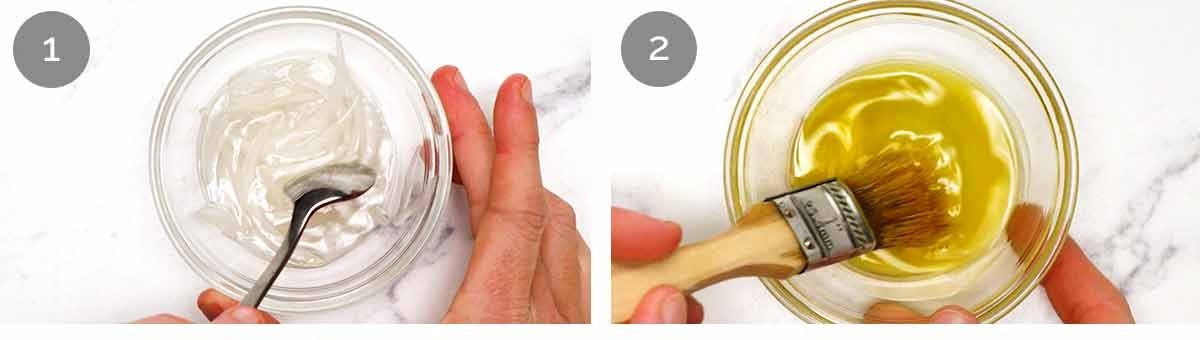
-
Pickle the onion first just by soaking it in the vinegar then setting aside for 15 minutes to let it go floppy.
-
Lemon vinaigrette for carpaccio – Mix the lemon, olive oil and salt in a bowl.
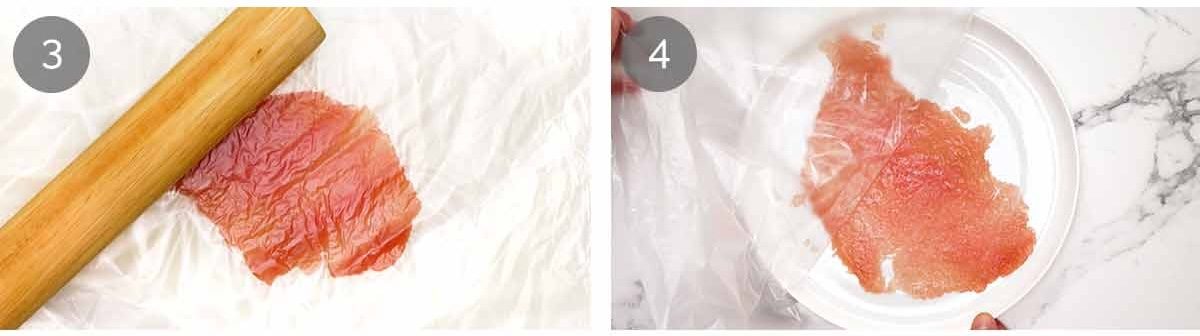
-
Pounding – Place the first piece of tuna on its cut side (see why in the recipe card’s notes below) between two sheets of go-between or parchment paper / baking paper until it is 2mm thin. It only needs a gentle pounding or rolling because fish is very delicate. Take care not to tear it.
-
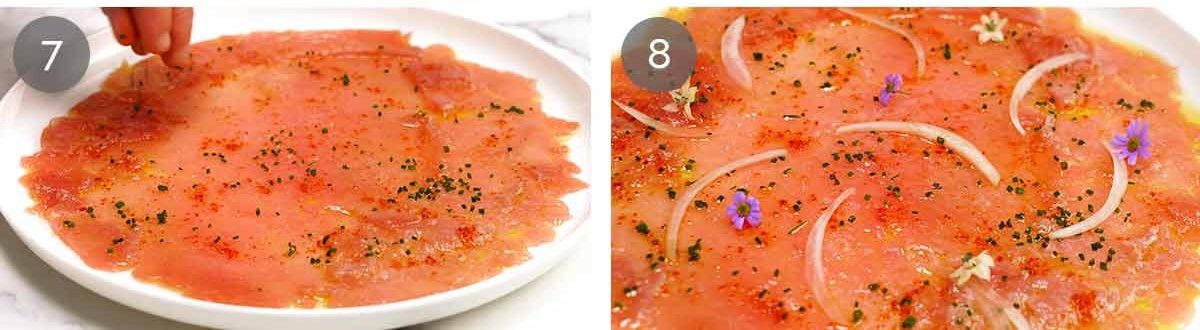
Flip the tuna onto the centre of the plate.
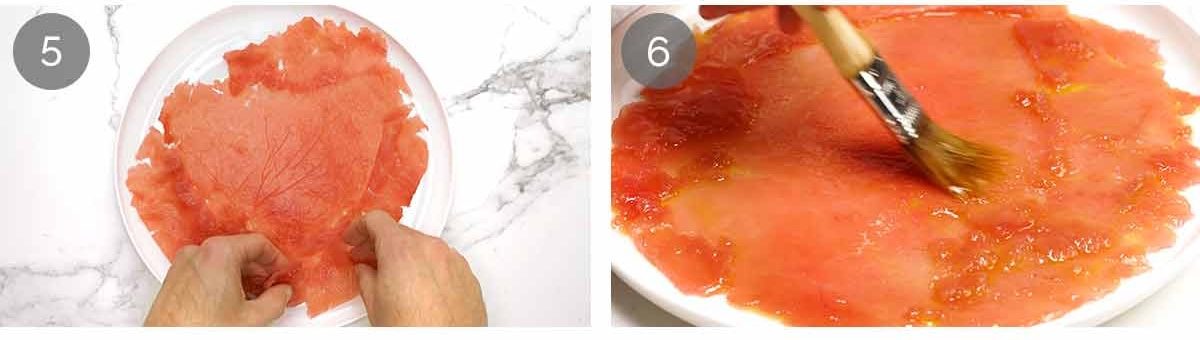
-
Fill edges – Pound the second piece of tuna then cut into pieces to fill around the edges so you end up with a single layer covering the whole plate. ** At this point you can cover with cling wrap and refrigerate until required.**
-
Brush the surface generously with the lemon vinaigrette just before serving. Don’t do it too far ahead as the lemon will “cook” the tuna (like lime juice does with ceviche), after around 15 minutes.
-
Sprinkle with salt flakes, Espelette pepper (or chilli powder), chives, pickled onion and scatter with flowers, if using.
-
Serve immediately with crostini on the side!
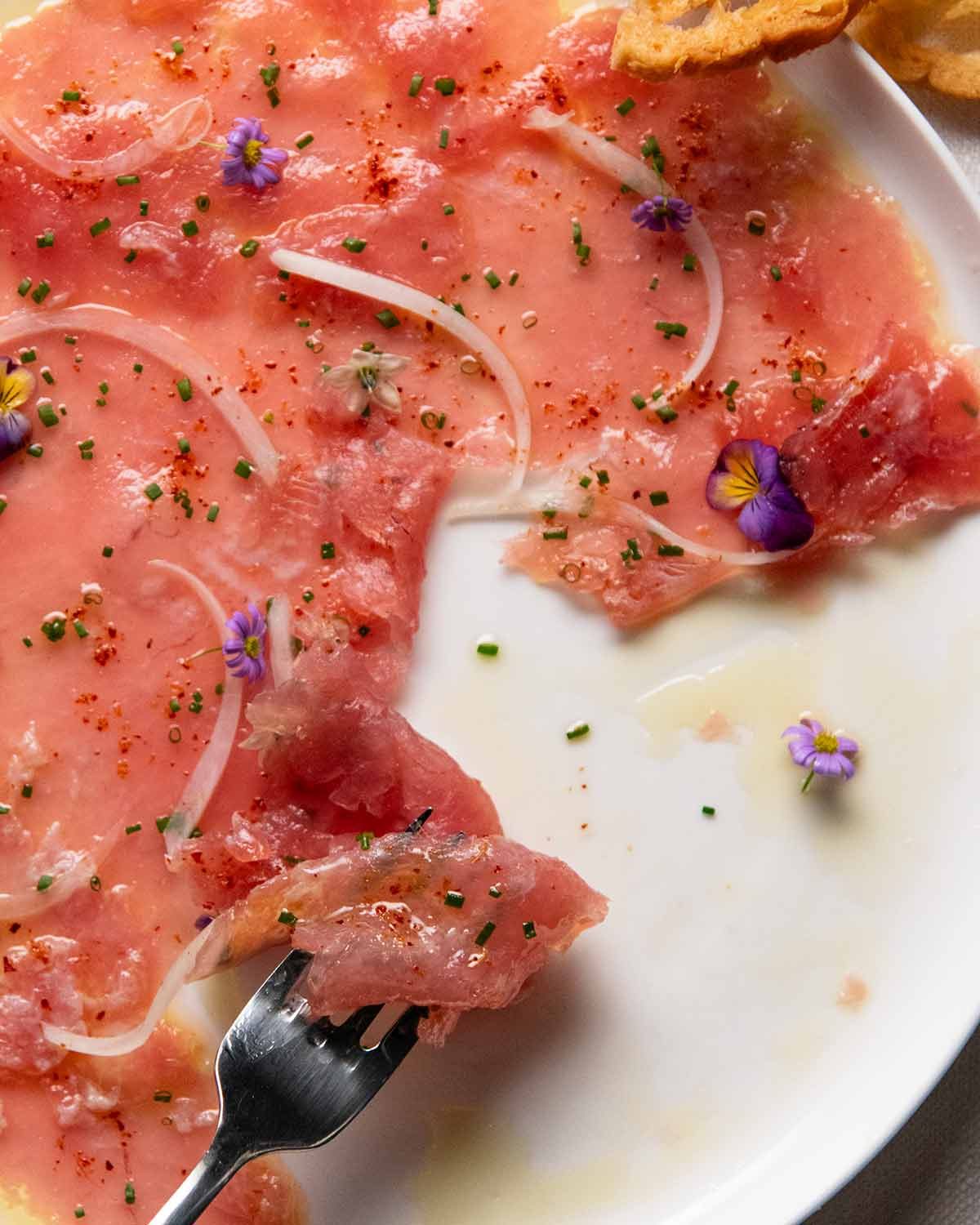
Serve immediately, straight after dressing so everything is at its best. It works well as a light starter for 2 or placed in the middle of the table for 4 to share. Add a few crostini on the side to scoop everything up and you are all set! It’s that easy! I hope you enjoy making it and eating it. Please share your feedback with me, I always love hearing how it turned out for you! Bon appétit! – JB
Watch How To Make it
Hungry for more? Subscribe to my newsletter and follow along on Facebook, Pinterest and Instagram for all of the latest updates.
Tuna Carpaccio
Prep: 20 minutes
Total: 20 minutes
Appetizer, entree, Fish, Seafood
Italian, Mediterranean
Servings2
Tap or hover to scale
Recipe video above. If you are like me and love anything carpaccio, then you’ll love this one! This is a simple yet fancy recipe, similar to one I used to make at a restaurant I’ve worked at, that you can easily make at home to impress your family or guests. The tuna is gently brushed with a lemon vinaigrette, seasoned then topped with pickled onion and freshly chopped chive. Serves 2 as an entrée or 4 as nibbles, perfect to start a meal or share.
Prevent screen from sleeping
Instructions
ABBREVIATED RECIPE:
-
Mix onion with vinegar, set aside. Combine vinaigrette ingredients, set aside. Flatten the first piece of tuna to 2mm. Flip onto plate. Flatten the second piece, cut into smaller pieces to fill any gaps on the plate. Brush vinaigrette, sprinkle salt, Espelette pepper and chives, then top with pickled onion and edible flowers. Serve immediately with crostini.
FULL RECIPE:
-
Pickle onion – Combine sliced onion and vinegar in a small bowl. Set aside for 15 minutes to soften. (You will have more than needed, use generously if you like.)
-
Make vinaigrette – Mix lemon juice, olive oil and sugar in a small bowl. Set aside.
-
Flatten tuna (first piece) – Place one piece of tuna on its cut side between two sheets of go-between (or baking paper / parchment paper) on a chopping board. Using a rolling pin, GENTLY tap and roll until about 2mm / 0.08″ thin (don’t smash!). (Note 5 & 6)
-
Transfer to plate – Place tuna flat side down onto the middle of a plate (I use a 26cm / 10″), then slowly peel off the sheet of plastic (or paper if using).
-
Repeat & fill – Flatten the second piece the same way, return it onto the chopping board. Cut into pieces that you think will fill the empty gaps, then arrange over the plate so you end up with a thin, even layer of tuna.
-
Dress – Gently brush the lemon vinaigrette over the tuna.
-
Finish – Sprinkle with salt flakes, Espelette pepper and chives. Top with a few slices of pickled onion and edible flowers if using.
-
Serve – Serve immediately with crostini on the side. Enjoy!
Crostini for Carpaccio
-
Preheat oven to 180°C/350°F (160°C fan-forced). Brush each side of bread with oil and sprinkle a tiny bit of salt, spread in single layer on a tray. Bake 15 minutes, turning halfway, until crisp. Cool on tray before using.
Recipe Notes:
Other suitable fish – see the ingredients list above in the post.
2. Espelette pepper (Piment d’Espelette) – is a mild French chilli from the Basque region, usually sold as a fine powder. It has gentle heat with a slightly sweet, fruity flavour, adding a subtle warmth without overpowering the tuna. Substitute with a pinch of chilli powder or black pepper.
3. Onion – If you opt for a white fish like kingfish, I suggest using red onion instead for better colour contrast, it will stand out more and give a nicer presentation on the plate.
4. Bread – I used pane di casa which is an Italian bread that has the ideal toasted texture for carpaccio (crispy but not as hard as sourdough), but you can use a sourdough or any other bread you want. If the bread slices are large, cut into smaller pieces (as pictured in post).
5. Pounding – There’s a right way to place the tuna before pounding because of how the muscle is structured. By turning the tuna onto its cut side before flattening, you’re working across the fibres rather than along them. This helps break them up slightly as you pound, giving a finer, more delicate texture that’s much nicer to eat.
6. Sheets for pounding – I use a product called “Go Between” which is like freezer bags but they are sheets used to keep food separated in the freezer without sticking to each other. It comes in a roll like cling wrap, brand is Glad (Australia). I’m using it here so you can clearly see how to flatten the tuna but baking paper / parchment paper works just as well.
Leftover and storage – Best eaten fresh, right after assembling. I really doubt you’ll have any left! But if you do, keep it covered in the fridge and consume within a day.
Nutrition per serving.
Nutrition Information:
Calories: 234cal (12%)Carbohydrates: 0.5gProtein: 11g (22%)Fat: 21g (32%)Saturated Fat: 3g (19%)Polyunsaturated Fat: 2gMonounsaturated Fat: 15gCholesterol: 22mg (7%)Sodium: 278mg (12%)Potassium: 112mg (3%)Fiber: 0.01gSugar: 0.3gVitamin A: 34IU (1%)Vitamin C: 1mg (1%)Calcium: 12mg (1%)Iron: 1mg (6%)
In Memory Of Dozer
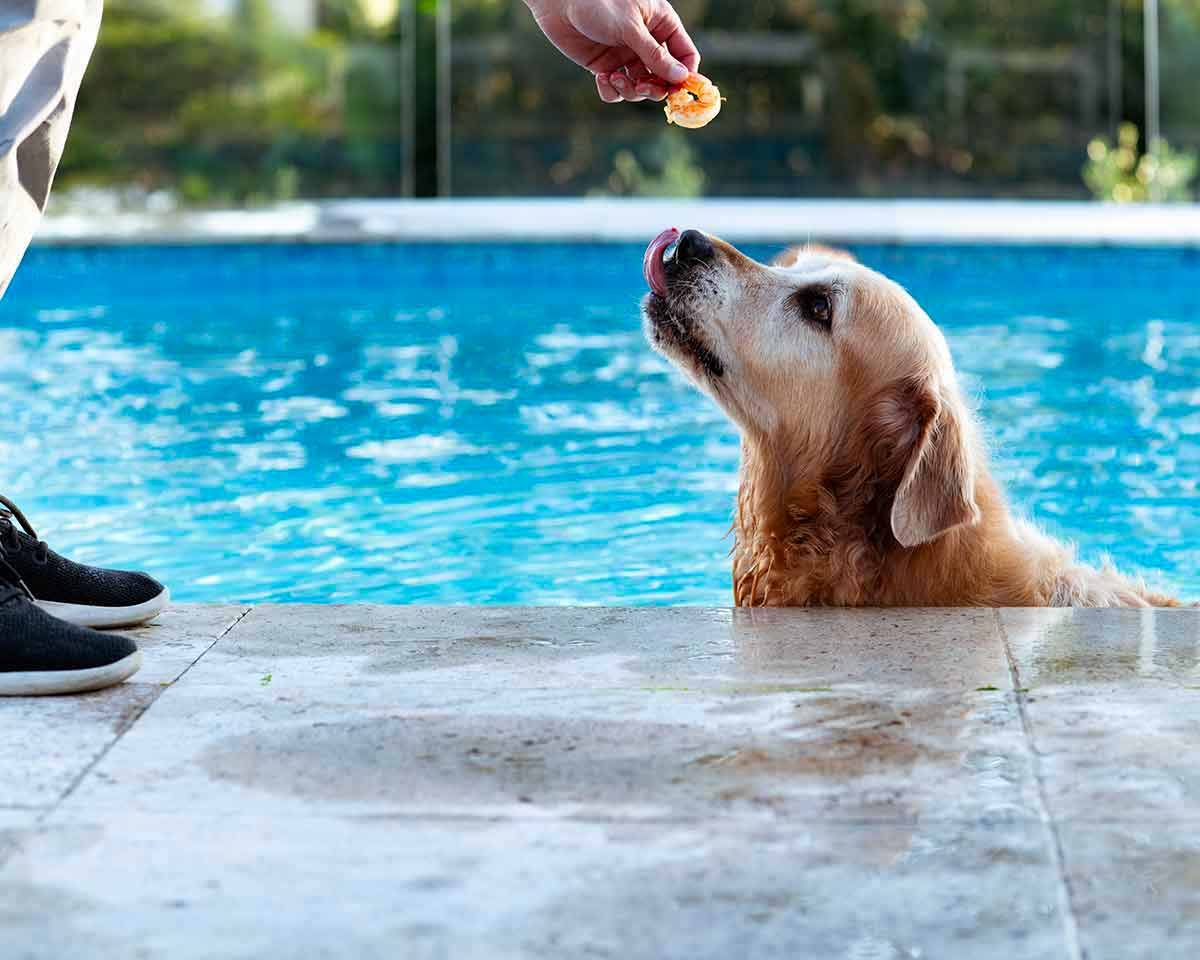
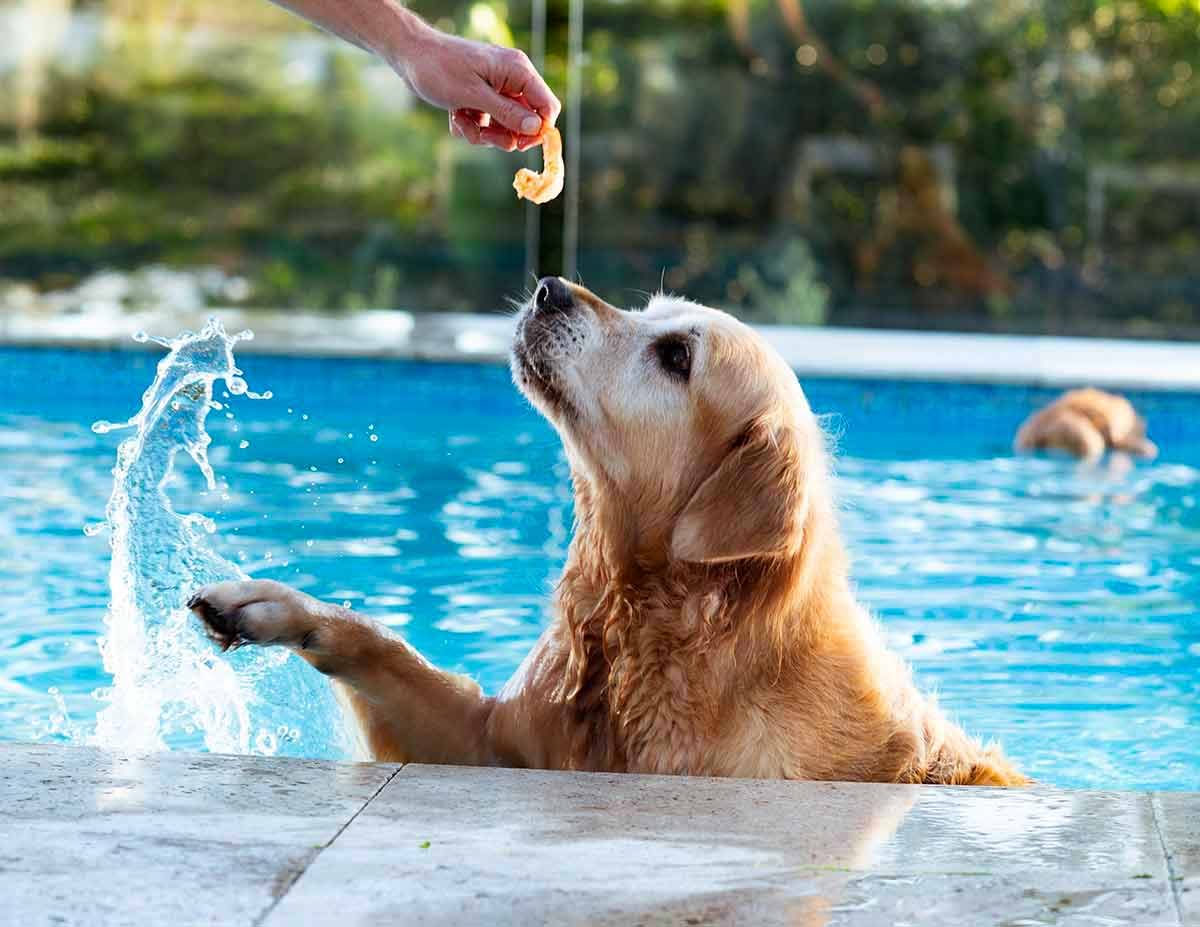
This is one of my favourite photos from Nagi’s first cookbook “Dinner”. It’s me holding the prawn, trying to get Dozer to launch himself out of the pool and eat it. It took us many takes to get the shot, and he went for it every single time without hesitation. I can’t remember how many prawns he ate that day (see below why 🤣) . It’s safe to say that he was very committed to his role! We miss you, Dozer!

All right, take 24 let’s do this JB! I promise I’ll get it this time.
Ok, target locked. I’ve got this!

It’s mine!

Oops… Oh no….

So sorry.. Can we do it again?